

Custom Patches for Aussie Footy Clubs: What to Know Before You Order
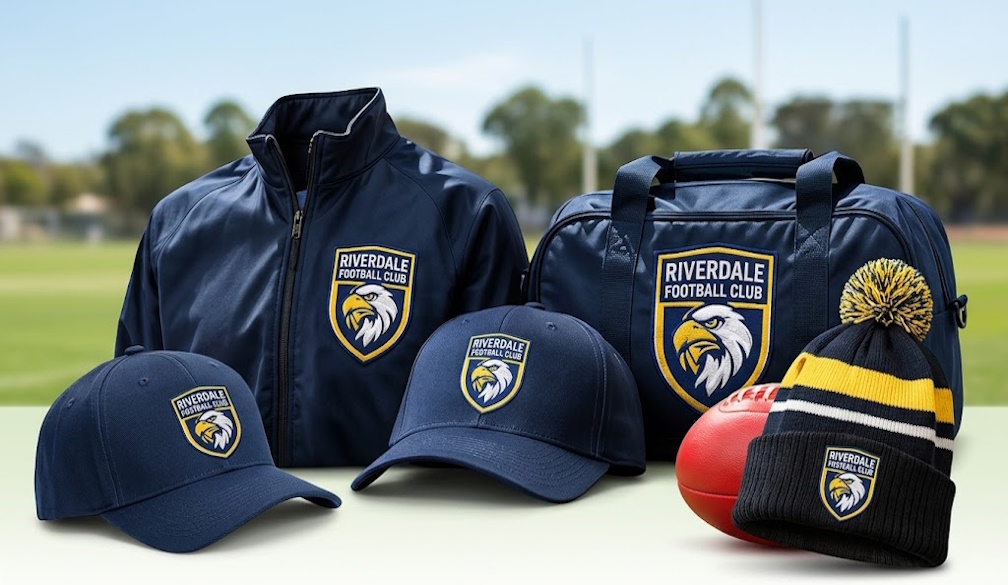
Quick answer: Before ordering patches for your footy club, you need to know seven things: what the patch is for, how many you need, what size it should be, how it will attach, what it is made of, when you need it, and whether your design is ready. Get these seven right, and your order will go smoothly. Skip them, and you will end up with the wrong badges, the wrong amount, or no badges before the first game.
Footy clubs across Australia do this every year. A new season starts, new players join, and someone gets asked to "sort out the badges." If that someone is you, this guide will make the job much easier.
Question 1: What Are the Patches For?
This sounds obvious, but it changes everything. Footy clubs use patches in a few different ways.
Club jackets and bomber jackets. These are worn by players, coaches and supporters, and often carry a big club crest on the chest or back.
Life member and committee jackets. These usually carry a smaller, neater badge that looks proper and lasts for many years.
Training gear and bags. A smaller badge on a sports bag or a training top helps everyone find their own stuff.
Caps and beanies. A small, simple badge works best here, since there is not much room.
Fundraising and supporter gear. Many clubs sell patches to fans, which means you may want a different, cheaper style to keep the price low.
Write down which of these you need. You may need two or three different patches, not just one.
Question 2: How Many Do You Need?
Most clubs order too few. Then a new player joins, someone loses a jacket, or a committee member asks for one, and the club has to order again.
A good rule is to count your players, coaches and committee members, then add about 15 percent extra. If you have 40 people, order around 46. The cost of a few spares is tiny compared with the cost of a rushed second order.
Remember, bigger orders cost less for each patch. This is because the machine setup takes the same time whether you make 20 patches or 200. Ordering once for the whole club is nearly always cheaper than ordering in small batches.
Question 3: What Size Should the Patch Be?
Size depends on where the patch is going.
A badge on the chest of a jacket usually works best at around 8 to 10 centimetres wide. A patch on a sleeve is smaller, about 5 to 7 centimetres. A badge on a cap should be even smaller, about 5 to 6 centimetres. A big patch on the back of a jacket can be 20 centimetres or more.
If your club logo has small writing, like a motto or the year the club started, the patch needs to be big enough for that writing to be read. Tiny words on a tiny patch turn into a blurry mess.
Question 4: How Will It Attach?
There are three ways to attach a patch, and each one suits a different job.
Sew on. This is the strongest and lasts the longest. It is the best choice for jackets that will be worn and washed for years.
Iron on. This is quick and easy, but it does not last as long, especially on jackets that get washed a lot. It should never be used on shiny, stretchy sports fabric, since the heat can melt it.
Velcro. This lets you swap patches on and off. It is useful for things like a captain's badge or a sponsor patch that changes each season.
For a jacket that should last, sewing is almost always worth the extra effort.
Question 5: What Should It Be Made Of?
The material changes how the patch looks and how long it lasts.
Embroidered patches are made with thread and have that classic, slightly raised look. They are tough, handle lots of washing, and suit most footy clubs. Our embroidered patches are a popular choice for club crests for exactly this reason.
If your logo has lots of tiny details, a flatter, finer style may show them more clearly. For bright colours that need to stand out and last in the sun, PVC patches are worth a look too, since they do not soak up water or fade easily.
Australian sun is tough on gear. If your patches will spend a lot of time outside, ask your patch maker about polyester thread, since it holds its colour better than other types.
Question 6: When Do You Need Them?
This is where many clubs get caught out. Footy seasons start at different times depending on the code and the level, but pre season training usually kicks off well before the first game.
Patch making takes time. First the design needs to be checked, then you approve a proof, then the patches are made, then they are delivered. Add a few days at the end for sewing them onto jackets.
A safe plan is to order your patches four to six weeks before you need them. If your first game is in late March, for example, think about ordering in early February. Clubs in Melbourne and Brisbane often start training in the heat of summer, so ordering before Christmas can save a lot of stress.
Ordering late usually means paying extra for rush production, and sometimes still missing the deadline.
Question 7: Is Your Design Ready?
Your club badge may have been drawn years ago, or it may only exist as a photo on a phone. This causes more delays than anything else.
A patch maker needs a clear, sharp picture of your design. If you only have a blurry photo or a screenshot, the picture may need to be redrawn before it can be turned into stitches. This takes extra time, so it is smart to find your best picture early.
Also, think about how many colours your design has. More colours can mean a higher price, and tiny colour changes in small spaces often do not show up well in thread. A simpler design usually looks better and costs less.
A Real Example: A Local Footy Club
Imagine a small suburban club with 35 players, 5 coaches and 10 committee members. That is 50 people. Add 15 percent, and the club orders 58 patches.
They want a 9 centimetre embroidered crest for the jackets, sewn on. They also want a smaller 5 centimetre version for caps. This makes two designs in one order, and they place it in early February, about six weeks before the first game.
The club saves their design file with the patch maker, so when new players join next year, the next order matches perfectly. No fuss, no panic, and no mismatched colours.
Common Mistakes Footy Clubs Make
Ordering exactly the number of players, with no spares. Waiting until pre season to start the process. Sending a blurry photo of the club badge. Ironing patches onto stretchy sports gear. And forgetting to ask whether the patch maker keeps designs on file for next season.
Frequently Asked Questions
How early should a footy club order patches before the season?
Four to six weeks before you need them is a safe window. This leaves time for design checks, production and sewing.
How many patches should a footy club order?
Count every player, coach and committee member, then add about 15 percent for spares and new joiners.
What is the best patch for a footy club jacket?
Embroidered patches are the most popular, since they are tough, handle lots of washing, and give that classic club crest look.
Can patches go on a footy guernsey?
Most guernseys are made from stretchy sports fabric, and are often printed rather than patched. Patches are usually better on jackets, bags and caps.
Do I need a perfect design file to order?
No, but a clear picture helps a lot. A blurry photo may need to be redrawn first, which can add time.
Can I reorder the same patch next season?
Yes, as long as your patch maker keeps your design on file. It is worth asking about this before your first order.
Ordering Considerations
If you are planning a patch order for your club, our custom patches range is a good place to start. Clubs and community groups in Australia can consult patch manufacturers like StitchKrafts Australia to review order quantities, patch options, production timimg and expected schedules.